Major U.S. Retailers Remove Millions of Listings for Banned Chinese Electronics

WASHINGTON (Oct 10) — Millions of listings for illegal Chinese electronics have been pulled down by major online retailers in the United States after the Federal Communications Commission (FCC) initiated action for the safety of national security.

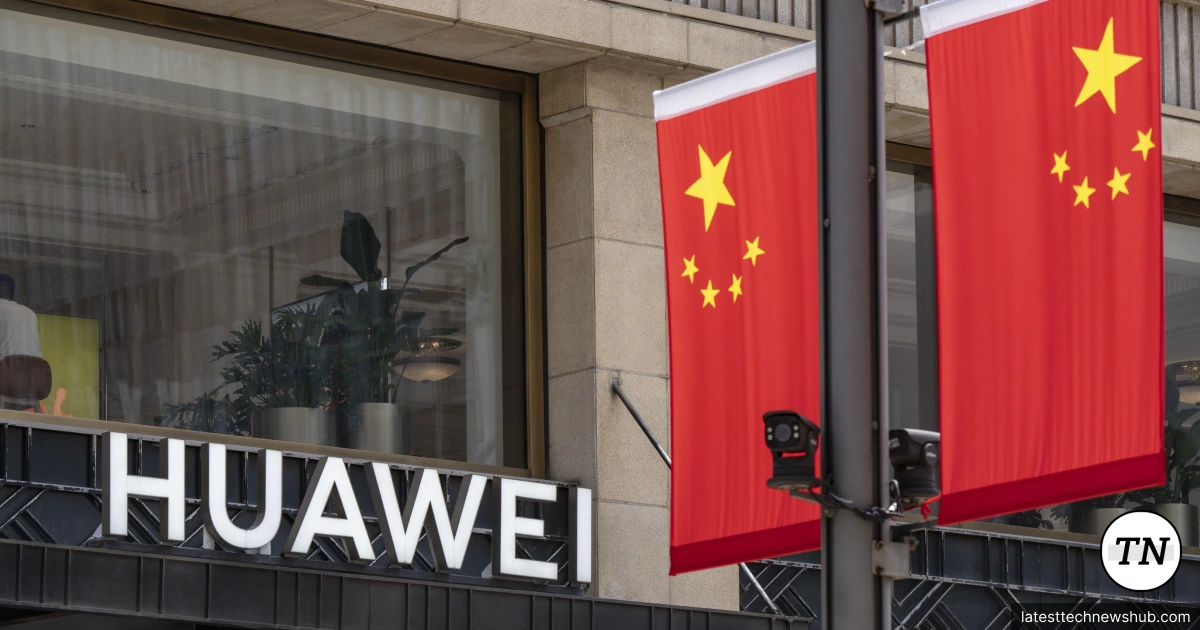
Brendan Carr, the FCC chair, confirmed that several platforms have indeed removed unapproved devices, including home security cameras and smartwatches from manufacturers like Huawei, ZTE, Hikvision, and Dahua Technology. The sweep targets products that either sit on the U.S. government’s restricted equipment list or that have never been formally authorized by the FCC.

“We’re going to keep our efforts up,” Carr said, indicating that retailers are setting up internal review systems so these products do not end up back on their websites.

Choking Down One National Security Threat After Another

The FCC recently issued a national security advisory to companies banning specific products, especially surveillance systems that may threaten issues concerned with data and privacy. Carr warned that the same equipment could allow foreign nations access to monitoring of Americans, disruption of communications networks, or the ability to damage critical infrastructure.

In the last couple of years, scrutiny against Chinese tech firms has been stepped up by governmental agencies in the U.S. touching on industries such as telecoms, semiconductors, and automotive electronics, with this current move being another attempt from Washington to barricade unauthorized Chinese tech from accessing the U.S. market.

Tighter Restrictions on Chinese Telecom Equipment

Earlier this week, the FCC proposed new rules to be adopted later this month to further restrain telecommunication hardware made by Chinese firms considered threats to national security.

The proposal due on October 28 will empower the FCC to revoke approval for previously approved devices that contain restricted components and also denies new authorizations for equipment linked to companies included in the “Covered List”.

The Covered List includes Huawei, ZTE, China Mobile, and China Telecom, all of which are already prohibited from selling new telecommunication equipment in the U.S. due to potential national security risks.

Investigations and Actions Continues

In March 2025, the FCC broadened investigations against nine Chinese companies under the Covered List. Those companies include Hytera Communications, Dahua Technology, China Unicom (Americas), and Pacifica Networks/ComNet.

The agency also initiated action to withdraw accreditation from seven testing laboratories owned or operated by the Chinese government last month, with the same concern for U.S. data exposure and oversight.

Meanwhile, Chinese authorities have yet to respond to the latest FCC enforcement actions.

Why It Matters

The most recent actions by the U.S. government illustrate rising geopolitical tensions between Washington and Beijing, especially regarding emerging technology and surveillance systems.

With more stringent regulation, officials hope to protect data privacy, sustain foreign influence, and strengthen domestic cybersecurity resilience, a priority as it is and may increasingly be, underpinned by digital infrastructure and connected devices.

❓ FAQs

Q1: Why did the FCC press the retailers of the U.S. to take off Chinese electronics?
The FCC has stepped up national security as its reason for finding some imported devices from Chinese manufacturers to be unauthorized or listed by the government as restricted.

Q2: Which firms products were banned?
The banned listings included those made by products from Huawei, ZTE, Hikvision, and Dahua Technology, among others that have connections with data and security risks.

Q3: What kinds of products were taken off the shelves?
Connected electronics primarily sold off by online retailers included home security cameras, smartwatches, and others that do not have FCC authorization.

Q4: What is FCC's Covered List?
It is a list of companies who are barred from marketing their telecom or tech equipment in the U.S. because it poses potential dangers in communication networks and privacy.

Q5: When will the new limitations go into effect?
The FCC will vote on October 28 regarding expansion of the rules regarding bans on devices containing previously allowed restricted components.

Q6: What is the impacts of this issue on US-China technology relations?
However, this sends a statement on the growing technology tensions brewing between Washington and Beijing as Washington's oversight on telecom, AI, and robotics becomes harsher due to related security concerns.


-----------------------------------------------------------

Categories:- AI & Machine Learning, Cybersecurity, Gadgets & Reviews, Startups & Business Tech

Latesttechnewshub is your go-to destination for the latest technology news, trends, and insights from around the world. We cover breaking tech updates, AI innovations, gadgets, software, startups, and digital trends—delivered in a clear, reliable, and easy-to-understand way.

Advertising latesttechnewshub

Snap forecasts quarterly revenue below estimates as ad competition hurts

Snap Inc. announced that its first-quarter revenue will fall short of what Wall Street had predicted because the company now faces stronger competition from major digital advertising companies which include Meta’s Facebook and Instagram.

The parent company of Snapchat has faced multiple difficulties during the past year because of changing U.S. trade regulations established by President Donald Trump and because of problems with its advertising system. These problems caused a major loss of trust among investors which resulted in Snap’s stock price dropping about 25% during 2025.

Advertisers now choose platforms that offer extensive worldwide accessibility which makes companies like Meta and TikTok their top choice because those platforms have more users. Snap showed positive trends in its advertising division despite facing tough competition from other companies. The company reported that its total active advertisers grew by 28% during the fourth quarter because of strong demand for direct response ads and newly introduced formats which included Sponsored Snaps and Promoted Places.

Snap announced that it has implemented platform-level age verification in Australia to meet new regulations which require users to be at least 16 years old. The platform removed more than 400,000 accounts as a result of this action.

Snap predicts its first quarter revenue will fall between $1.50 billion and $1.53 billion which represents a decrease from analysts’ forecasted average of $1.55 billion according to LSEG data.

The company does not include Perplexity revenue which stems from a $400 million partnership that was revealed last year in its revenue projections. Snap stated that both companies have not yet settled on a complete distribution plan.

Snap expected its current quarter adjusted EBITDA to exceed market predictions. The company forecasts earnings between $170 million and $190 million which will exceed analyst projections of $177.9 million because it is focusing on stricter cost management and profitability.

Snap achieved a net income of $45 million during the fourth quarter which represents a major increase from the $9 million earned in the same period last year. The company reduced its total net loss for 2025 to $460 million which is an improvement from the previous year when it lost $698 million.

The company is expanding into new business areas which go beyond its core advertising operations. Snap has established its independent unit Specs to develop augmented reality smart glasses while continuing to create new revenue streams through its Snapchat+ subscription service. The number of service subscribers increased by 71% reaching 24 million during the fourth quarter.

Daily active Snapchat users increased by 5% from the previous year to reach 474 million while the company lost 3 million users since the last quarter.

The quarterly revenue which ended on December 31 increased by 10% to reach $1.72 billion which surpassed the analyst forecast of $1.70 billion.

This reporting is by Jaspreet Singh in Bengaluru and Editing by Krishna Chandra Eluri from reuters. Checkout how Amazon Plans to Use AI to Speed Up TV and Film Production.

❓ FAQs

Q1: Why did Snap forecast revenue below Wall Street estimates?
Snap expects lower first-quarter revenue due to intense competition for digital advertising dollars from larger platforms like Meta’s Facebook, Instagram, and TikTok.

Q2: Is Snap’s advertising business still growing?
Yes. Despite revenue pressure, Snap reported a 28% increase in active advertisers in the fourth quarter, driven by direct response ads and newer formats such as Sponsored Snaps.

Q3: What impact did Australia’s age verification rules have on Snap?
Snap implemented platform-level age verification in Australia to comply with new regulations, which resulted in the removal of more than 400,000 accounts.

Q4: How is Snap improving profitability?
The company is focusing on tighter cost controls and operational efficiency, leading to an adjusted EBITDA forecast that is above analyst expectations for the current quarter.

Q5: What new revenue streams is Snap focusing on?
Snap is diversifying beyond ads by investing in augmented reality smart glasses through its Specs unit and expanding its Snapchat+ subscription service, which now has 24 million subscribers.

-----------------------------------------------------------

Categories:- Software & SaaS, Startups & Business Tech

Latesttechnewshub is your go-to destination for the latest technology news, trends, and insights from around the world. We cover breaking tech updates, AI innovations, gadgets, software, startups, and digital trends—delivered in a clear, reliable, and easy-to-understand way.

Advertising latesttechnewshub

Exclusive: Amazon Plans to Use AI to Speed Up TV and Film Production

Amazon will utilise AI technology to enhance the production speed of television shows and movies, according to this exclusive report. Amazon will implement artificial intelligence technology throughout Hollywood to improve movie and television production times, while the industry faces work disruption threats from this technology.

Albert Cheng who has worked in the industry for many years about Amazon MGM Studios leads the team which develops AI tools to decrease production expenses and improve creative processes. The company will begin its closed beta testing program in March 2023 by allowing selected industry partners to evaluate the tools until they achieve their first results in May.

Cheng describes the initiative, known internally as AI Studio, as a small, agile operation that follows the Amazon founder Jeff Bezos’ two-pizza team method by containing enough members to eat only two pizzas. The team consists of engineers and scientists who receive support from a small creative and business division.

The public AI initiatives of Amazon occur during a period when increasing production costs restrict studios from approving more projects. The company uses AI to automate and speed up particular filmmaking processes, which results in increased content production at a lower creative impact.

“The cost of creating is so high that it’s really hard to make more and really hard to take great risks,” Cheng said. “AI can speed things up according to our beliefs but it needs human inventiveness to create special storytelling which leads to outstanding results.”

The Hollywood community experiences anxiety because of this decision. High-profile actors including Emily Blunt have expressed their worries about the increased use of AI especially with the creation of AI-generated performers which jeopardises traditional acting roles.

Amazon demonstrates that its AI technology exists to support human staff instead of replacing them. AI will assist writers, directors, actors, and character designers as they create their work throughout production.

Like many tech giants, Amazon has been pushing nearly every business unit to explore AI use cases. The company has also cited AI-driven efficiencies as one factor behind its decision to cut around 30,000 corporate jobs since October, including roles at Prime Video.

According to Cheng, AI could help solve some of the biggest challenges in large-scale film and TV production.

The focus area he addresses involves the “last mile” which connects consumer AI technologies with filmmakers’ cinematic content accuracy requirements. The system requires character continuity through scene,s while it must work together with common creative software in the film industry.

The tools operated by Amazon Web Services (AWS) give Amazon capabilities that will enable the business to work with various language model creators, who will provide original content makers the ability to work during both pre-production and post-production periods. The studio prioritises two objectives, which include safeguarding intellectual property and stopping AI-created materials from being used in external systems.

The AI Studio is already collaborating with notable industry figures, including producer Robert Stromberg (Maleficent) and his company Secret City, actor Kunal Nayyar (The Big Bang Theory) through Good Karma Productions, and former Pixar and Industrial Light & Magic animator Colin Brady.

Launched last August, the studio points to its series “House of David” as a glimpse into AI’s future role in filmmaking. For the show’s second season, director Jon Erwin combined AI-generated visuals with live-action footage to create large-scale battle scenes, seamlessly blending both elements to expand the scope of the production at a lower cost.

As Amazon moves forward, the company believes AI could become a powerful tool in reshaping how stories are brought to the screen—while keeping human creativity at the center of the process.

This Reporting is by Dawn Chmielewski in Los Angeles and Greg Bensinger in San Francisco Editing by Nick Zieminski from reuters.

❓ FAQs

Q1: Why is Amazon using AI in movie and TV production?
Amazon is adopting AI to reduce rising production costs and speed up time-consuming processes. The goal is to make it easier to produce more films and shows while keeping budgets under control.

Q2: Will AI replace writers, actors, or directors at Amazon?
No. Amazon has stated that AI will be used as a supportive tool, not a replacement. Writers, actors, directors, and designers will remain involved at every stage of production, with AI enhancing creativity rather than replacing human talent.

Q3: What is Amazon’s AI Studio?
AI Studio is a small, specialized team within Amazon MGM Studios focused on building AI tools for filmmaking. It operates like a startup, following Amazon’s “two-pizza team” philosophy to stay agile and innovative.

Q4: How is AI being used in real productions already?
Amazon points to its series House of David as an early example. AI was combined with live-action footage to create large-scale battle scenes, helping expand visual scope while keeping costs lower.

Q5: When will these AI tools be available to creators?
Amazon plans to launch a closed beta program in March, allowing select industry partners to test the tools. Initial results and feedback are expected to be shared by May.

-----------------------------------------------------------

Categories:- AI & Machine Learning, Software & SaaS, Startups & Business Tech

Latesttechnewshub is your go-to destination for the latest technology news, trends, and insights from around the world. We cover breaking tech updates, AI innovations, gadgets, software, startups, and digital trends—delivered in a clear, reliable, and easy-to-understand way.

1 thought on “Exclusive: Amazon Plans to Use AI to Speed Up TV and Film Production”

Comments are closed.

Advertising latesttechnewshub

Samsung Expects Strongest Profit Since 2022 as AI Demand Tightens Memory Chip Supply

SEOUL (Oct. 14) — Samsung Electronics was expected to record the strongest quarterly profit in over three years, led by strong demand in memory chips across the globe and by the AI boom, which will consequently affect commodity chips to be in tight supply, pushing prices high.

The South Korean tech giant also expected an operating profit of 12.1 trillion won ($8.5 billion) for the July–September period, up 32% on a yearly basis and better than the expected analyst figure of 10.1 trillion won as compiled by LSEG SmartEstimate. The result is a notch back to one of Samsung’s finest for this quarter in the last 13 and a signal of the semiconductor market that has a strong foundation to return.

AI Throws Out Some Cork in the Memory Ocean of Recovery

In that respect, while lagging in its effort to capture a chunk of the high-bandwidth memory market clients (by selling HBM chips to Nvidia, for instance), Samsung’s strong showing in conventional DRAM and NAND memory markets might have fueled the loss-making AI chip sales.

“The earnings surprise came from the chip business,” said Ryu Young-ho, senior analyst at NH Investment & Securities. “Strong demand for conventional memory to support general-purpose servers, combined with robust HBM demand for AI servers, has fueled overall memory demand.”

Samsung’s dominance has been largely drawn from its memory chip-making, which has stayed the longest in the world, as some of the closest constraints haven’t hampered the supply-export scenario with such good fortune. DRAM chips — which have been widely used in servers, smartphones, and PCs — were up by over 170% in price from a year earlier yield, according to TrendForce.

Increasing Revenue with Pricing Power

Sales in the quarter rose by 8.7% to 86 trillion won, an all-time high since it benefited from a weakening won and higher chip prices. Analysts said the Samsung Foundry division managed to cut losses during the period by becoming more profitable, which helped the overall business.

“Samsung is a major beneficiary of the growing demand for commodity chips,” said Sohn In-joon from Heungkuk Securities, pointing out that lower inventories and stronger DRAM and NAND prices have given the company more bargaining power.

The company is expected to release detailed earnings on October 30.

AI Boom Tightens Memory Chip Supplies

AI infrastructure — including servers and data centers — that are being built out across the globe is essentially choking the supplies of traditional memory chips, which have thus faced lengthy periods of scarcity through 2026, during which memory chip prices are likely to rise.

Many chipmakers involved themselves in producing advanced AI hardware, thereby squeezing the supply of regular memory. Analysts anticipate the shortages in the commodity memory through 2026 by rapidly accelerating AI-related upgrades and will continue to cause similar conditions in other major tech firms.

Samsung has recently secured various supply contracts involving Tesla and OpenAI which suggest that it might be focused on AI applications. However, potential trade tensions between the US and China, export restrictions, and other hikes on tariff barriers could spoil its ambition in consumer electronics and its chip exports in the impending quarters.

AI Ambitions and Future Outlook for Samsung

While Samsung surrendered its global No. 1 DRAM market share to SK Hynix this year, a gradual recovery is expected to resume when it presents the bulk production of HBM3E chips and get set to develop HBM4 for 2026, as analysts project.

“Samsung is on track with next-generation HBM4 development, working closely with major U.S. partners,” Morgan Stanley noted in a recent report.

To further encourage employees, the company plans to launch a performance-based share compensation program for all its employees across South Korea over the next three years, according to a recent internal memorandum.

Amid fierce market competition, analysts seem confident that Samsung has the right ingredients in its mix, such as AI-driven innovation, careful supply discipline, and strategic R&D investment, to hit a bulls-eye in the memory market.

Outlook

In conclusion, Samsung performance in the third quarter represents the balancing act between AI and the recovery in the traditional chip market. Hence, the future balancing token for AI chips and memory chip production will be the location of the fight for the halfway house shaping the next decade conjoined with semiconductor technology.

❓ FAQs

Q1: Why is Samsung reporting its highest profit since 2022?
Profit rose sharply as demand from end users to increase the prices of conventional memory chips derived from the rising trend in the development of AI infrastructure and data centers around the world.

Q2: How much profit did Samsung earn in the third quarter?
The expected operating profit of the company for the period between July and September is about 12.1 trillion won, or roughly $8.5 billion, marking the best quarterly performance in more than three years.

Q3: What causes the global chip shortages?
While manufacturers chase after AI and high-output chips, production of conventional memory chips has, however, slowed down, tightening supply and lifting prices.

Q4: How does Samsung compete in AI chip technology?
Samsung is vigorously stepping up its production of HBM3E and next generation HBM4 chips with an aim to par the gap between itself and SK Hynix while further strengthening partnerships with American counterparts like Nvidia.

Q5: What risks could hinder Samsung's growth?
Analysts conjecture that along with U.S.-China trade tensions, export controls, and competition in the AI market, the aforementioned factors could hinder or inhibit Samsung's future earnings and operations.

-----------------------------------------------------------

Categories:- AI & Machine Learning, Cybersecurity, Software & SaaS, Startups & Business Tech

Latesttechnewshub is your go-to destination for the latest technology news, trends, and insights from around the world. We cover breaking tech updates, AI innovations, gadgets, software, startups, and digital trends—delivered in a clear, reliable, and easy-to-understand way.

Advertising latesttechnewshub